
How a restaurant's food scraps become your garden bed
Everything we sell started as something someone else was done with: a cafeteria's leftovers, a storm-downed cottonwood, last fall's leaves. Here's the path from their bin to your truck, step by step.
Collect
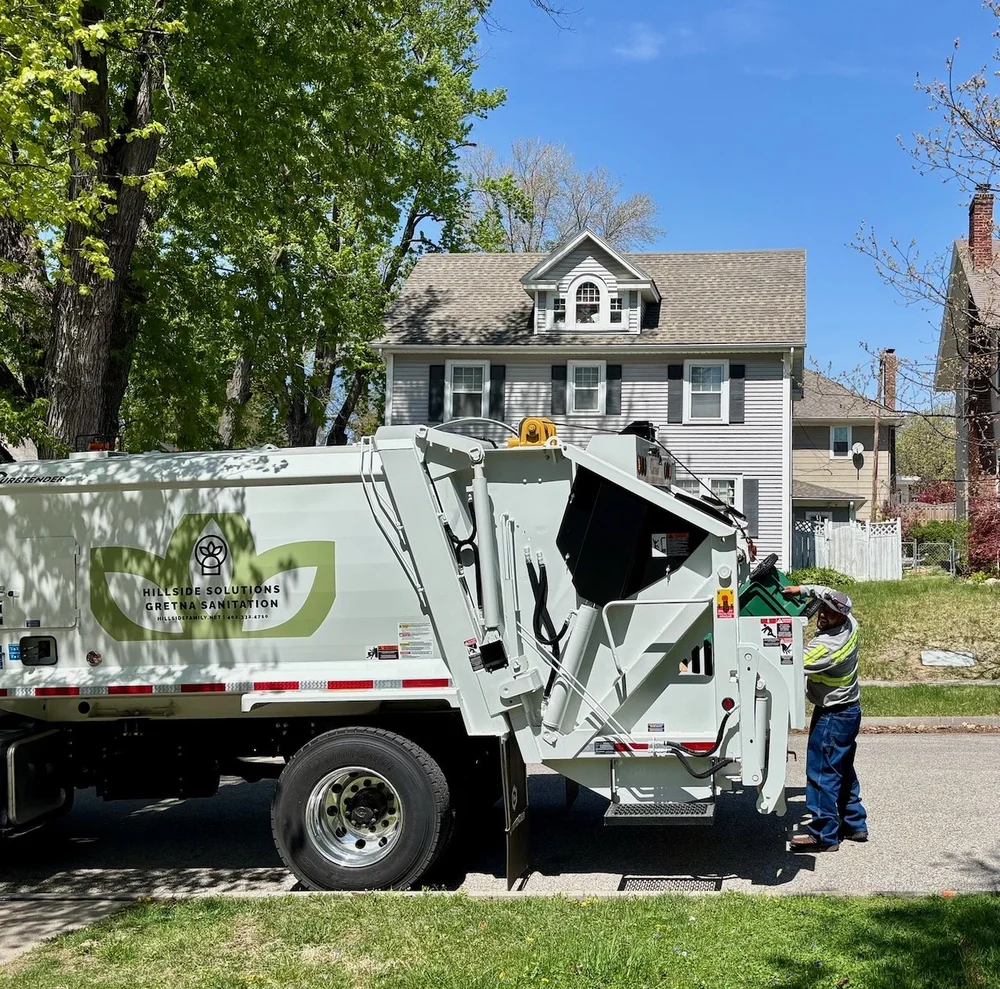
Food waste comes in from restaurants, schools, businesses and homes across the Omaha metro, picked up by Hillside Solutions and the Compost Club, plus big one-off events like Earth Day Omaha. Yard waste comes in on Gretna Sanitation routes and from the public at our Downtown Omaha drop-off yard. Tree and wood waste comes from the drop-off yard and our own grinding jobs.
Transport
Our trucks move thousands of tons of recycling and compostables a year between our Omaha-area sites and the farms we partner with.
Sort and grind
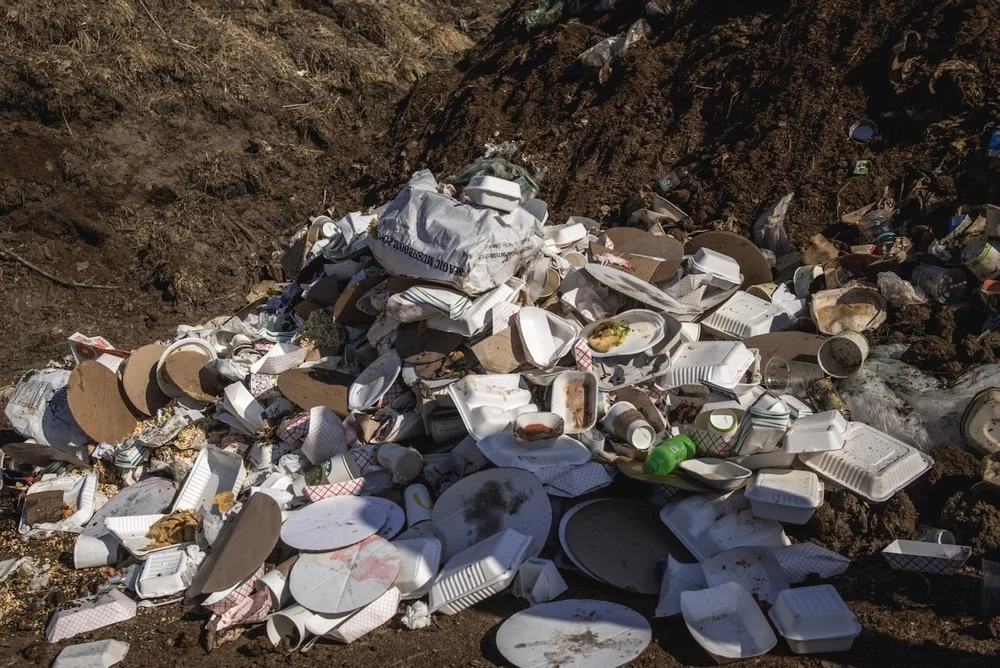
Before anything is composted, the crew pulls out what doesn't belong: plastic, glass, the occasional fork. Wood goes through the tub grinder. Food waste is blended with ground yard waste so the pile has the right mix of wet and dry, green and brown.
Steam
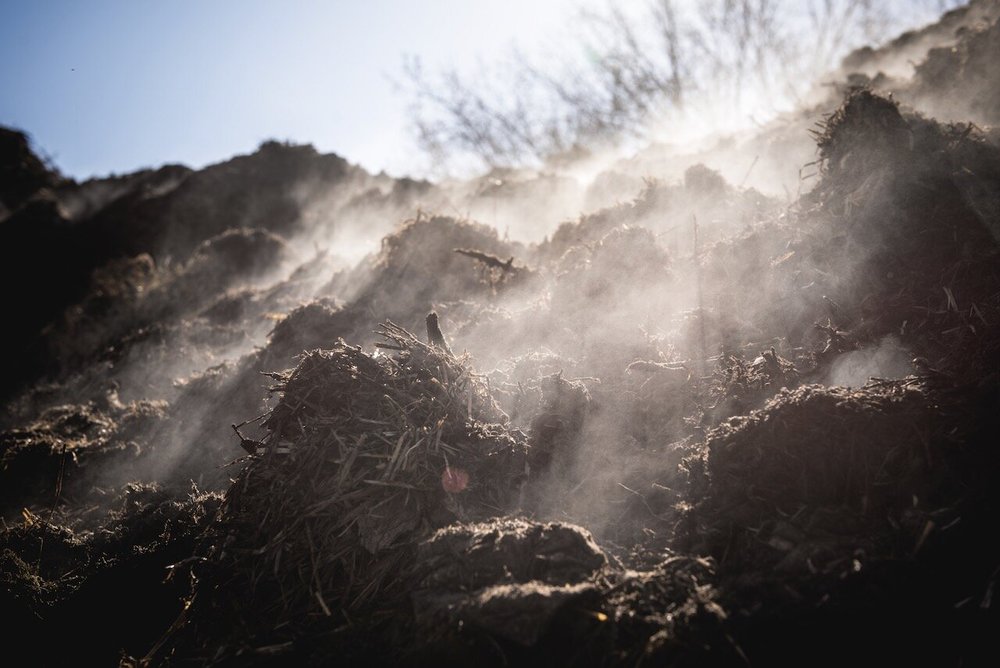
The piles heat up on their own as microbes go to work. They reach a temperature that kills harmful bacteria and weed seeds while the beneficial bacteria, the ones that feed plants, survive. On a cold morning you can see the piles steaming from the road.
Turn and cure
It takes about two months for the material to become compost, and then it cures for up to a year. Nebraska winters help; the freeze and thaw keeps breaking things down. Curing is the slow part, and it's a big part of why ours costs more than yard-waste compost.
Zero discharge
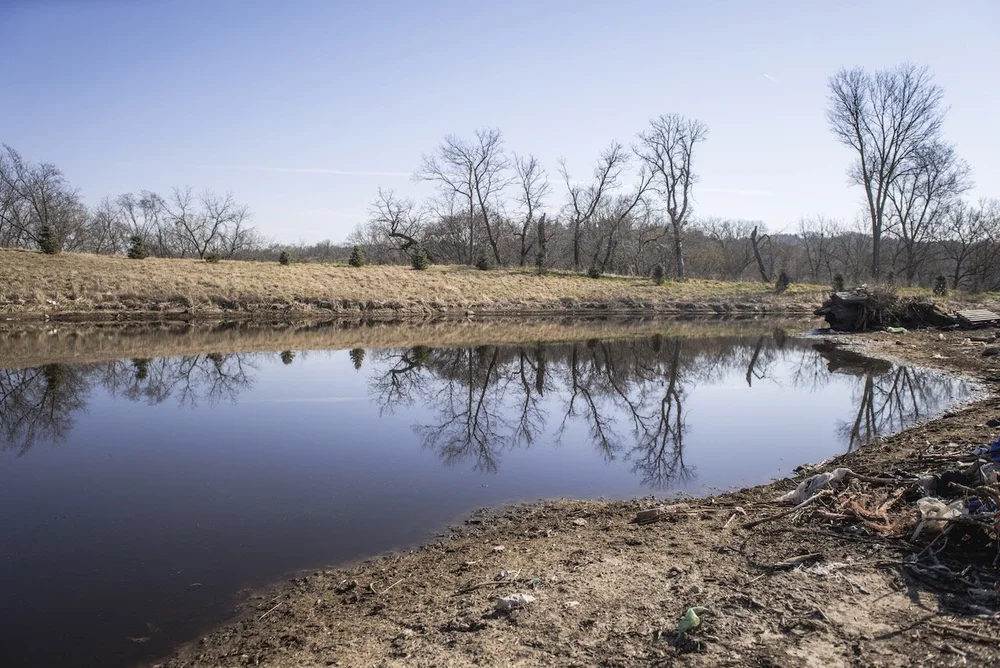
The pad slopes to a catch pond. Rain and runoff from the piles drain to the pond and get pumped back onto the piles to hold them at about 50 percent moisture, which is what kills the weed seeds. Nothing leaves the site.
Screen
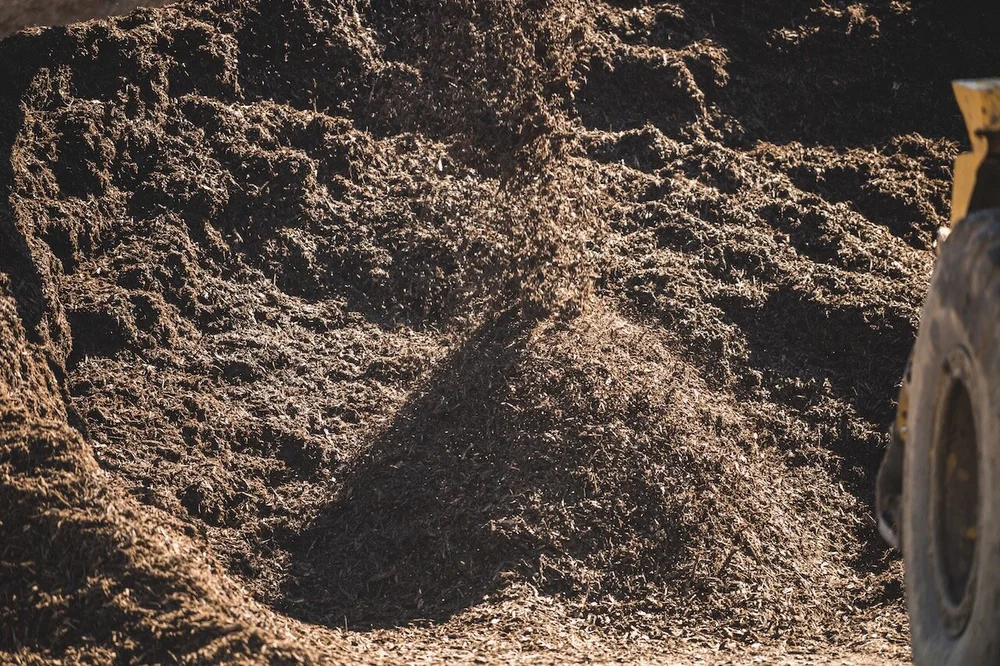
Finished compost is screened through half-inch screens. Mulch is double screened so the pieces are a consistent size. What doesn't make it through goes back into the next pile.
Blend
Some compost is sold as is. Some is blended with locally sourced sand and soil into Raised Garden Blend, or used in topsoil and bioretention mixes made to a spec.
Now plant it
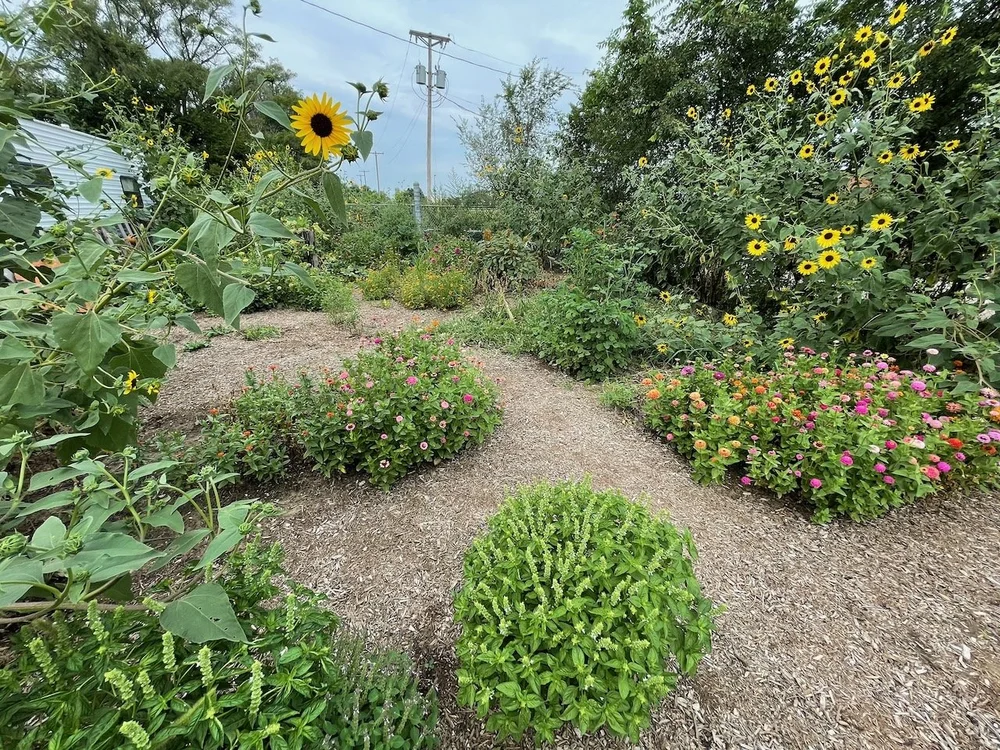
The finished compost, soil blends and mulch go to farmers, gardeners and landscapers across the metro from the Downtown Omaha yard, and by the truckload on delivery.
See it for yourself
We host tours of the Ashland farm for schools, businesses and community groups by appointment. Email admin@soil-dynamics.com or call (402) 332-4710 ext. 5 to set one up. What to know before you come
To see how we farm the land with what we make, read about our regenerative agriculture work.
Soil Dynamics is the composting arm of the same locally owned team as Gretna Sanitation and Hillside Solutions. How the three fit together.